

There’s a moment every traveller dreads: your flight is delayed, the app crashes mid-scroll, and the chatbot cheerfully informs you it “understands your frustration” before suggesting a FAQ about baggage allowance. Welcome to the uncanny valley of AI in travel – where the welcome is warm, the promises are big, and the exit sometimes feels… elusive.
Like the guests in Hotel California, you can check in anytime you like, but when things go sideways, good luck finding the manager. Or a human. Or a functional “back” button.
Yet the dream is seductive: AI that makes travel seamless, delightful, even magical. The reality? Sometimes brilliant. Sometimes baffling. And often both in the same itinerary.
The Dream: When AI Feels Like a Five-Star Upgrade
Let’s give credit where it’s due. When AI works in travel, it really works. Not in a gimmicky “talk to this robot about your horoscope and hotel options” kind of way, but in ways that genuinely reduce friction and boost confidence.

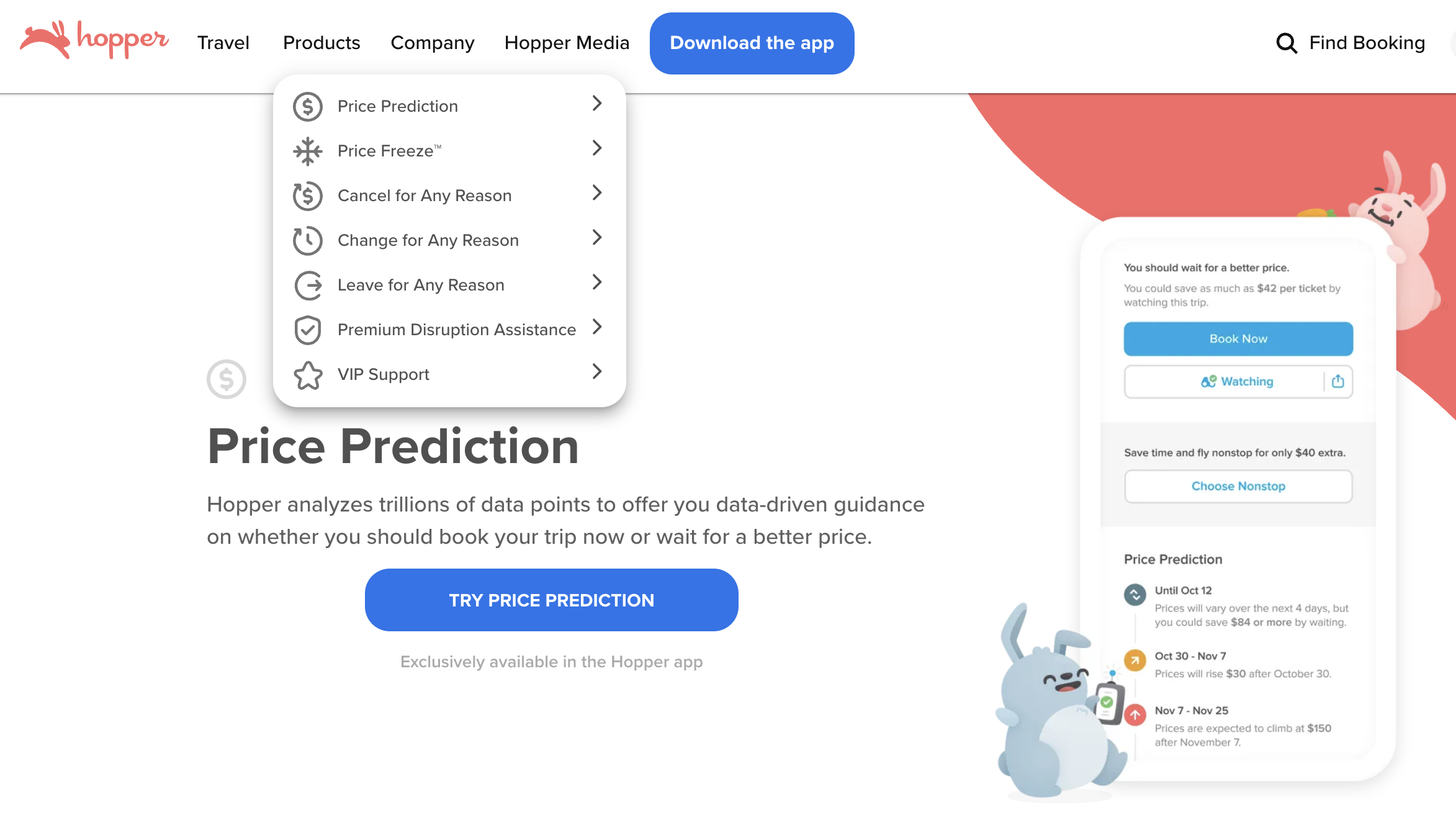
Take Hopper, for example. Their price-prediction engine doesn’t just guess when to book – it offers “Cancel for Any Reason” and “Price Freeze” features that let you feel in control, even if your plans aren’t. Add their new voice bot (powered by PolyAI) that now resolves 15% of calls without making you want to scream, and you’ve got a travel companion that’s more Gandalf than Clippy.
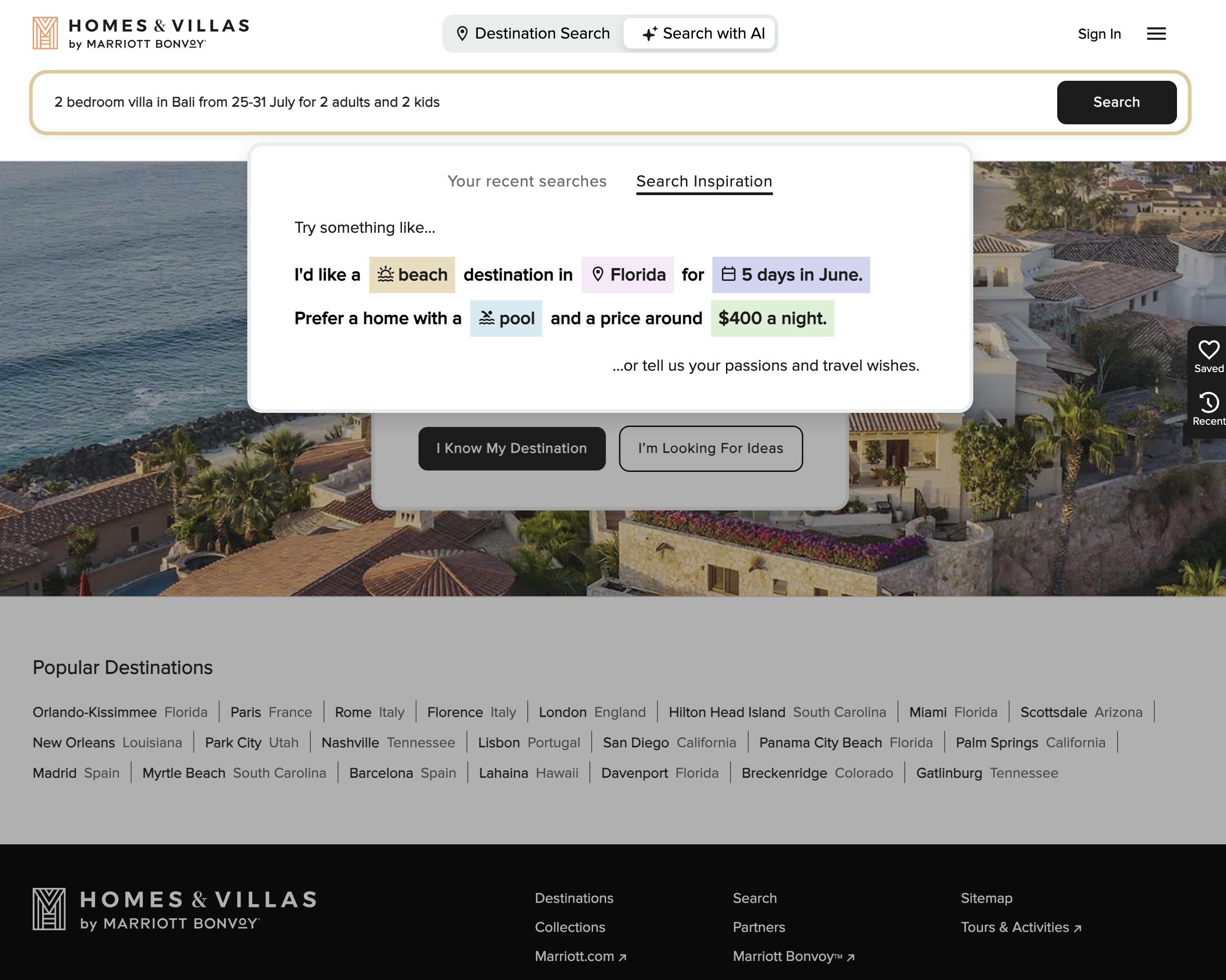
Or Booking.com, whose AI-powered review summaries and smart filters mean you no longer have to scroll through 127 posts about “great location!” and “decent breakfast” to find out if the shower pressure will ruin your morning. Marriott’s Homes & Villas site has rolled out similar natural language search features, making it easier for users to ask real-world questions like “family-friendly villas for 2 adults and 2 kids with a pool” and actually get relevant results quicker than having to sort through loads of filters.
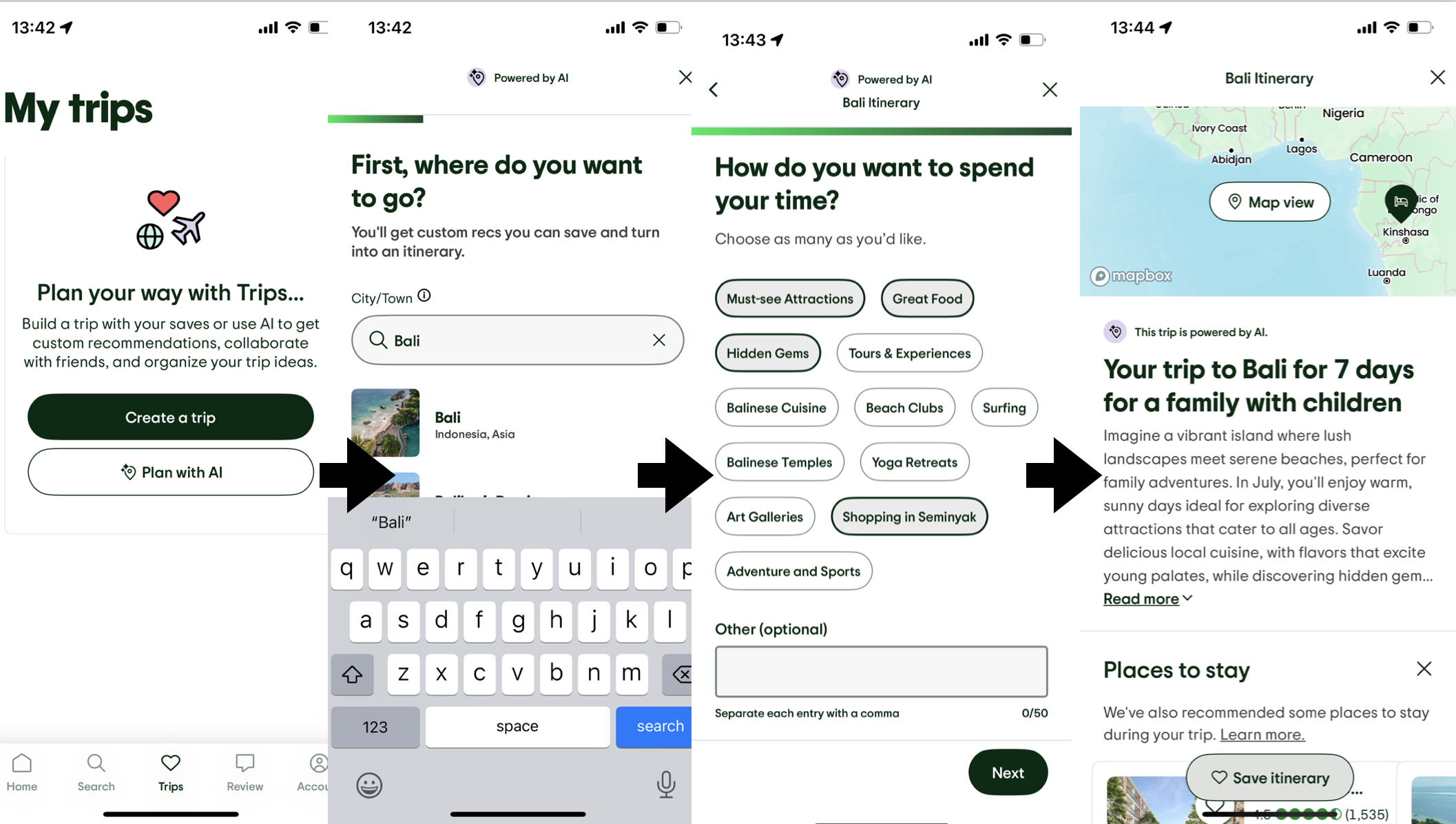
Tripadvisor, too, has quietly integrated trip and itinerary curation in a way that feels more like a seasoned local sharing tips than an LLM awkwardly reading from a script. The experience is smooth, helpful, and blessedly free of AI jazz hands.
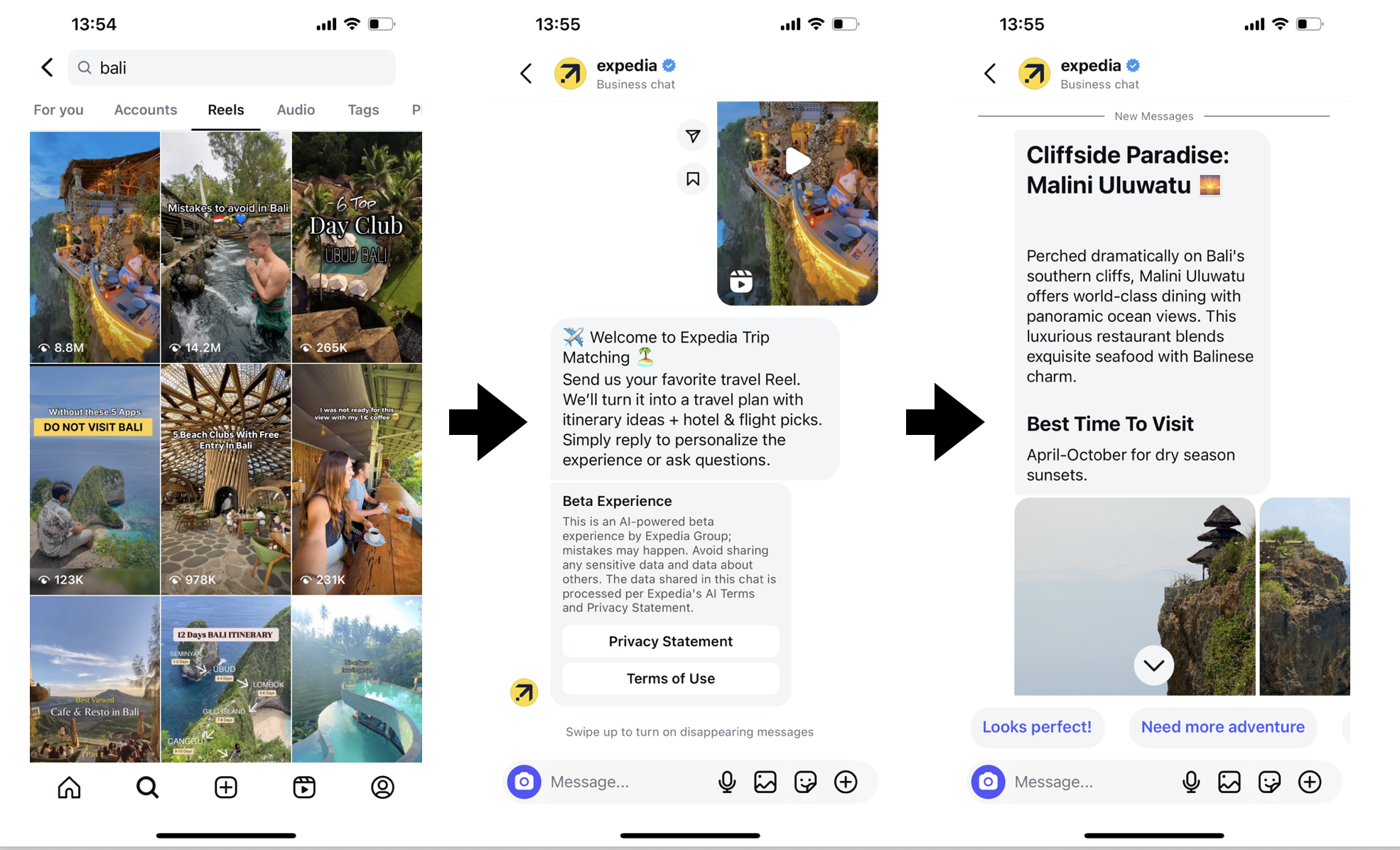
Expedia took it a step further with Trip Matching: drop them an Instagram Reel and get a full itinerary in return. Like magic, if the magician also booked your rental car. Here’s a quick test I did using a reel from Bali…and it got the location exactly right.
And then there’s United Airlines, whose GenAI now explains flight delays like a friend breaking bad news gently – “Your flight’s late because of crew rest requirements following a weather delay in Denver” instead of the classic “operational reasons” mystery meat (Picture Source).

These tools work because they’re not trying to be clever for clever’s sake. They solve real problems: stress, indecision, lack of transparency. That’s where AI shines.
The Trap: When AI Gets in the Way of a Good Stay
Now for the not-so-room-service-worthy side.

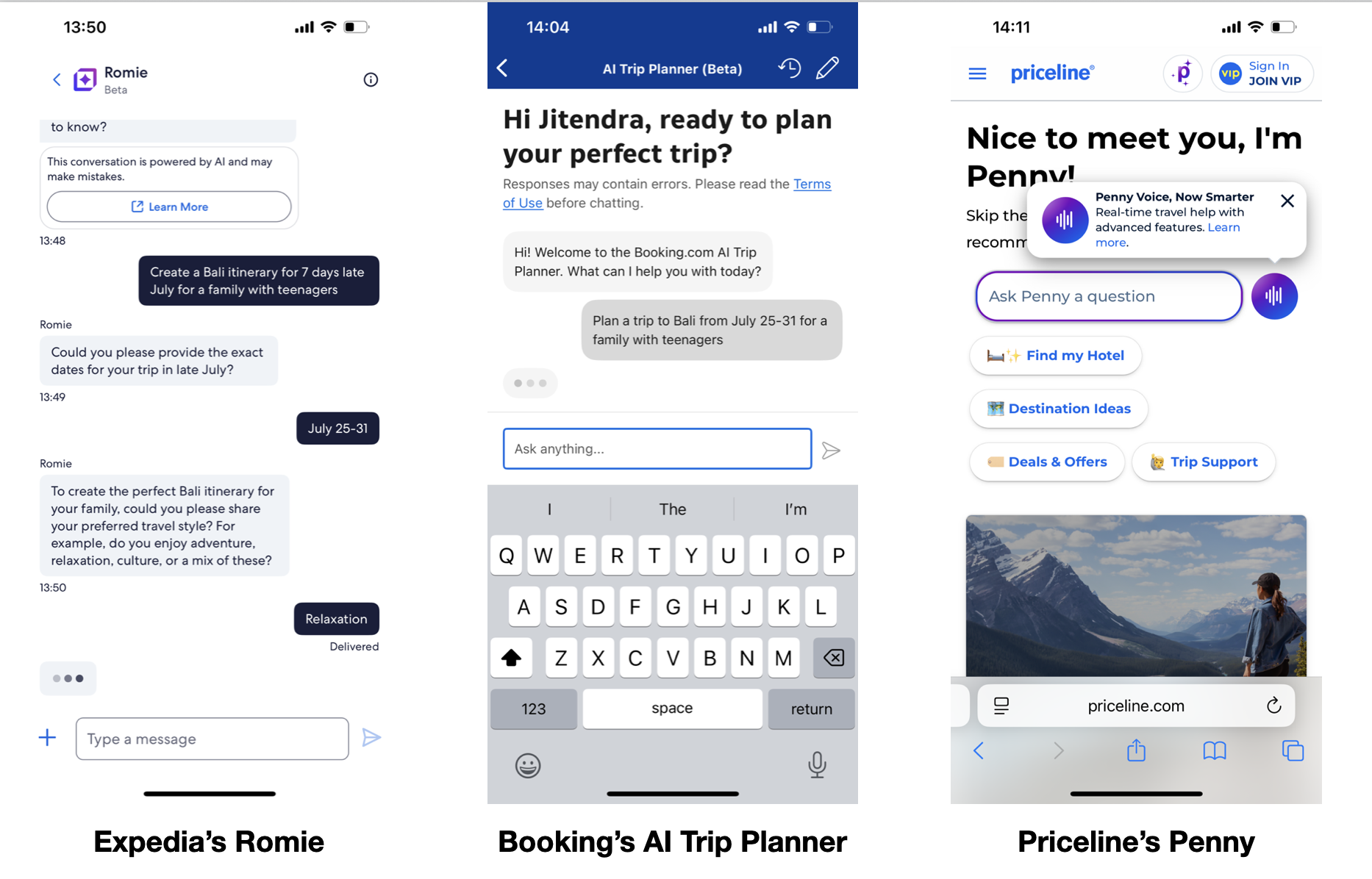
Across the industry, a common misstep is the urge to bolt a large language model (usually ChatGPT or similar) into an app and call it innovation (some features I reviewed in May 2023 still haven’t evolved much). It makes for a great press release, but often falls short in the real world. Why? Because the model hasn’t been customized to the brand, trained on proprietary data, or integrated into the backend systems that actually do things.
So instead of a thoughtful assistant, customers are met with a chatbot that answers like a generic tourist brochure: polite, verbose, and mostly useless in a crunch. Want to change your booking? Sorry, “I’m just a prototype.” Need to reach a human? Good luck finding that option.
Then there are loyalty tools and upgrade systems that aim for fairness but land on opacity. Algorithms decide who gets perks, but travellers are left wondering if the machine truly understands their value – or just their price tag.
And let’s not forget the clunky containers: beautiful AI features buried under login loops, app crashes, and out-of-sync data. Even the smartest assistant can’t help if the system forgets what room you’re in.
The trap isn’t AI itself. It’s the failure to connect it meaningfully to the guest journey – plus the unresolved tangle of legacy systems, scattered data, and patchy processes underneath it all. To be fair, it’s still early days for GenAI in travel. These implementations will only improve as brands bring the right people, budgets, and tech stacks to the table.
Room Service from the Future:
AI That Might Actually Blow Our Socks Off
Let’s check into the near-future suite, shall we?

- Agentic Co-Pilots: Think AI that doesn’t just respond – it acts. Notices your cancelled flight, finds a rebooking, alerts your hotel you’ll be late, and reschedules your airport transfer. All while you’re still finishing your biscotti at gate 27.
- Multimodal Inspiration-to-Booking: Snap a TikTok, point to a beach in AR, whisper “somewhere like this” to your voice assistant – and watch it spin up an itinerary, with real prices, real reviews, and book-now buttons.
- Predictive Fin-Warranty Bundles: Tiny, dynamic fees for peace of mind: delay cover, lounge access, or cancellation protection priced in real-time.
- Invisible Sustainability: Smart systems that cut buffet waste, optimise housekeeping, or reroute supplies for eco-efficiency – all without preaching.

- Voice-First, Language-Aware Service Bots: Assistants fluent in your language and context. They know your loyalty status, your past stays, and they pick up the phone like a pro, not a parody.
- Trust & Safety Engines: With trust becoming ever more important (and scarce), AI that spots fake reviews, flags shady listings, and scores behaviour risk – so you spend less time guessing and more time relaxing.
Check-Out Time: AI Tips for the Traveller Today
Besides the emerging (and hopefully improving) AI features from hotel companies, airlines, and OTAs, what can savvy travellers do now with off-the-shelf AI tools to get the best out of their trip?

- Use GenAI for Inspiration: ChatGPT 4o, Claude, and Gemini are great for surfacing new ideas and uncovering hidden gems. Ask for places like “X, but less touristy” or “3-day itineraries for foodies who hate queues.”
- Switch to Reasoning Models for Complex Itineraries: Planning a road trip with max driving hours, kid-friendly stops, and backup rain plans? ChatGPT o3 and Gemini 2.5 Pro handle logic, constraints, and day-by-day builds better than their creative cousins.
- Explore Multimodal Powers: Cutting-edge models like ChatGPT o3 and Gemini 2.5 Pro support image input, maps, and even live video. Take a photo of a monument and ask for details. Point your phone at a street scene and ask, “Where am I?”- and they’ll likely figure it out. Great for on-the-go discovery or visual translation.
- Bridge Language & Culture Gaps: Use AI as a real-time translator or cultural guide—whether you’re deciphering a local menu, understanding etiquette, or helping your kid talk to new friends in the hotel pool.
- Cross-Check & Combine Tools: Use an AI for the plan, but validate against Google Maps, Rome2Rio, or direct airline/hotel sites. Most AI hallucinations aren’t dangerous, just occasionally… aspirational.
- Watch for Hidden Power Features: Some apps have smart AI hiding behind bad UX. Look for auto-suggestions, dynamic filters, or trip summaries that go beyond templates.
- Always Keep the Human Option Nearby: If an AI bot blocks human help, that’s a red flag. Great AI should elevate humans, not eliminate them.
Final Thought: The AI Concierge Test
Here’s the simple litmus test for travel AI: Does it make you feel safer, smarter, or more in control?
If the answer is yes, welcome to the future. If not, it might just be another digital bellhop holding your bags hostage while the app crashes.

AI can still deliver the dream – but only when it checks into the same hotel as good design, deep integration, and a little hospitality common sense.
Because in the end, nobody minds a stay at Hotel California… so long as the AI helps you check out happier than when you arrived.
Discover more from Hotelemarketer by Jitendra Jain (JJ)
Subscribe to get the latest posts sent to your email.
 Hotelemarketer by Jitendra Jain (JJ)
0 comments on “AI’s Hotel California: You Can Check-In Anytime, But Can You Ever Check-Out?”