
I made a film about the one moment a hotel can’t automate. Then the AI making it proved my point for me.
By 2 a.m., she has nothing left to give.
Her flight was delayed twice. She missed every chance to eat. She stood alone at a baggage carousel and watched it turn until it stopped, and her bag never came. Then it rained, the kind of rain that finds the gap between your collar and your scarf. She has a presentation at nine. Her charger’s dead. She is out of options and nearly out of composure.
She reaches a quiet hotel desk and tries to explain. “I have a presentation at nine. My bag’s gone, my charger’s dead. I can’t…”
The night manager, Marco, doesn’t reach for sympathy. He reaches for the problem. “Leave the claim tag with me.”
“No, it’s fine. I can sort it.”
“Of course. But not tonight.”
Four words, and you can see something in her give way. Not because he comforted her. Because he gave her permission to stop carrying it. A charger and a kit go up to her room. Her shirt will be pressed and back by six, so nine o’clock stops being a threat. He walks her to the lift and carries the weight she can’t.
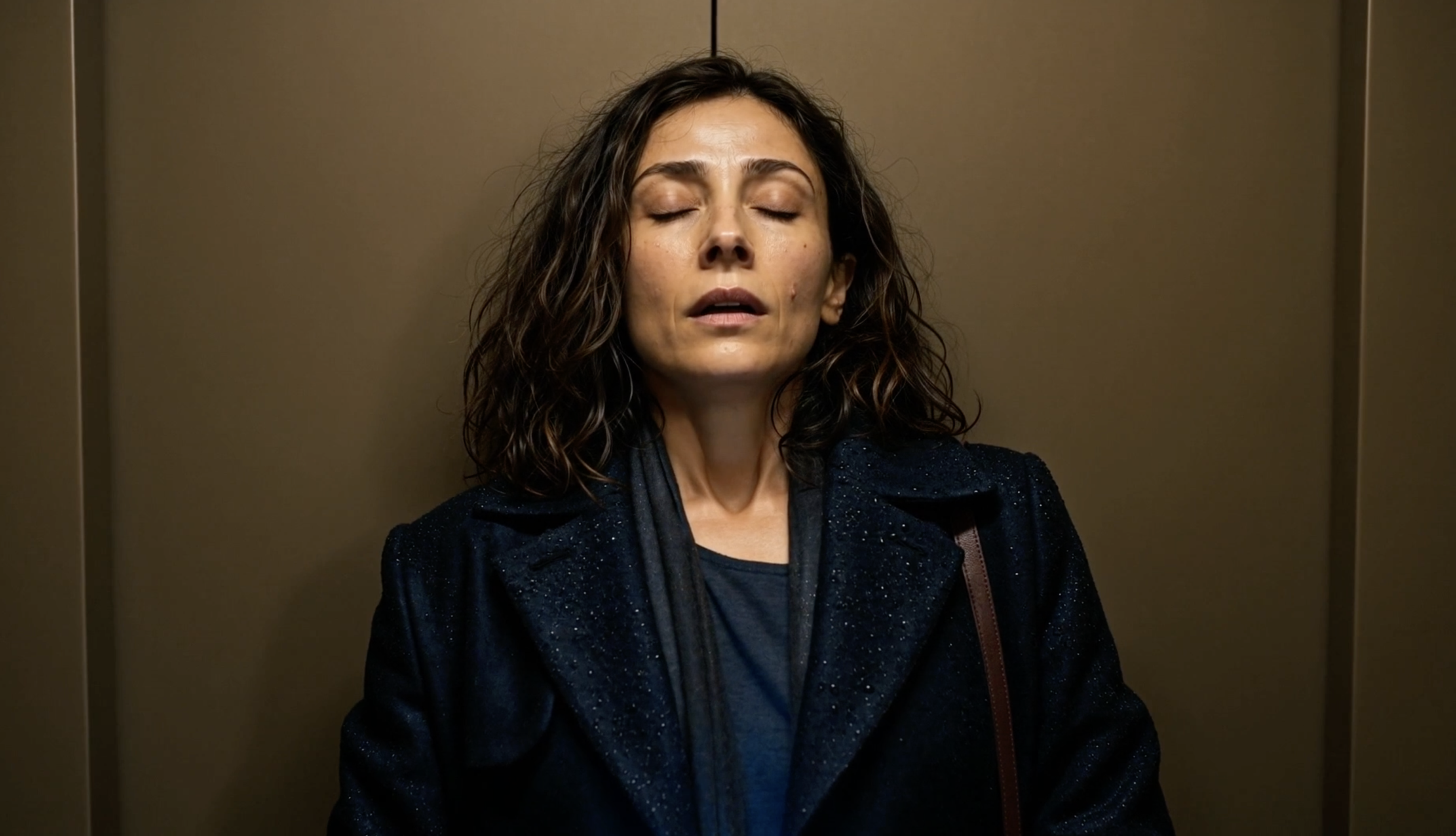
She holds it together through all of it. Then the doors close, she’s finally alone, her shoulders drop, and she lets out the breath she’s been holding since the first delay.
That’s the moment. Not the kindness. The release, the instant it’s safe to let go.
Then a question fades up on a black screen. What in your work would fail that test?
Now the part that should bother you a little
Every frame of that film was made by AI. I didn’t shoot a second of it. I generated the airport, the rain, the lobby, Marco’s face, Elena’s exhaustion, all of it, on a Saturday, with Seedance on Runway and an afternoon in Final Cut Pro.
And it taught me the most, by failing in exactly the right places.
The machine built a convincing world and then fumbled every detail a human would never miss. The departure boards garbled into alien text. The note Marco hands across the desk came out as gibberish. In one shot Elena carries a bag through the door; in the next it has vanished. Marco walks her to the lift holding more objects than he has hands for. The lift she steps into opens onto a lobby from a different hotel entirely.
I patched what I could. Cleaned up some text with Aleph, chopped the worst continuity slips, cropped the rest out of frame. The result is good enough, as long as you don’t look too closely.
But the detail it missed most wasn’t a sign or a bag. It was the feeling.
I could conjure the rain in seconds. The one frame that carries the whole film, that breath in the lift, took take after take, and the machine kept handing me something that looked right and felt like nothing. I nearly cut the weakest version to save face. Then I realised the miss was the message.
The brief is the job
Ethan Mollick shared something this week I can’t stop turning over. Of all the people using AI agents to write code, the group with the highest success rate wasn’t the engineers. It was the managers. The skill that wins is knowing what you want and what good looks like, and being able to say it clearly.

Anyone who has ever briefed a team already owns that superpower. Most of us just haven’t noticed it’s transferable.
I felt it directly this weekend. The AI was the entire crew. I was the director, and directing turned out to be the whole job. Not the generating. The knowing. Knowing that the film didn’t live in the rain or the chandelier, but in one exhale behind a closing door.
When the doing becomes free, the deciding becomes everything
For two years we measured AI by what it could do. Write the code. Cut the video. Draft the email. That race is basically over. The doing is becoming cheap, fast, and often very good. A new open model landed this month that codes nearly as well as the flagships at roughly a quarter of the price. The floor is rising for everyone at once.
So the model was never the moat.
When execution costs almost nothing, the scarce thing is taste. Knowing where the feeling lives. That isn’t a technical skill. It’s a human one, and it’s the one we’ve trained the least.
What Marco knows
Here’s what struck me once the film was done. Marco and I were doing the same job.
He didn’t perform empathy for Elena. He located it. He knew that at 2 a.m. the thing she needed was her shirt pressed by six and one less decision to make, not a kind speech. Knowing where the feeling lives, and acting on it before she had to ask. That’s the whole craft of hospitality, and no utility function reaches for it.
Which gives us a test. Take any moment in your guest’s journey and ask one question: could a machine optimising for price, rating, and policy produce this on its own?
Most of what we do fails that test, and that’s fine. The booking, the rate, the upsell, the pre-arrival email. Hand those to the agents. They’ll do them better than we do, and your guest’s AI is probably booking through them already. (Your real customer, increasingly, is an algorithm with a utility function, not a person who fell in love with your story.)
But the 2 a.m. arrival passes. So does every moment that was ever truly yours.
So the real question for the next few years isn’t whether AI takes the hotel job. It’s which part of the job was ever truly yours.
The close
I gave a crew of machines an entire film. They built a world. They just couldn’t find the one moment that made it worth watching. I had to do that. Marco had to do that. You’d have to do that.
The video asks what in your work would fail the 2 a.m. test. Here’s my answer. The parts that would fail are the parts worth protecting.
Let the machines do the doing. Keep the deciding. And whatever you build this year, point it at the 2 a.m. moment.
Discover more from Hotelemarketer by Jitendra Jain (JJ)
Subscribe to get the latest posts sent to your email.
0 comments on “The 2 a.m. Test: AI Made My Hotel Film. But It Couldn’t Understand the Moment That Really Mattered”